Before the Mending Basket: How People Kept Clothes in Use
Learn how to keep clothes in use with practical ways to assess damage, choose a repair or another next step, and avoid letting useful garments languish.
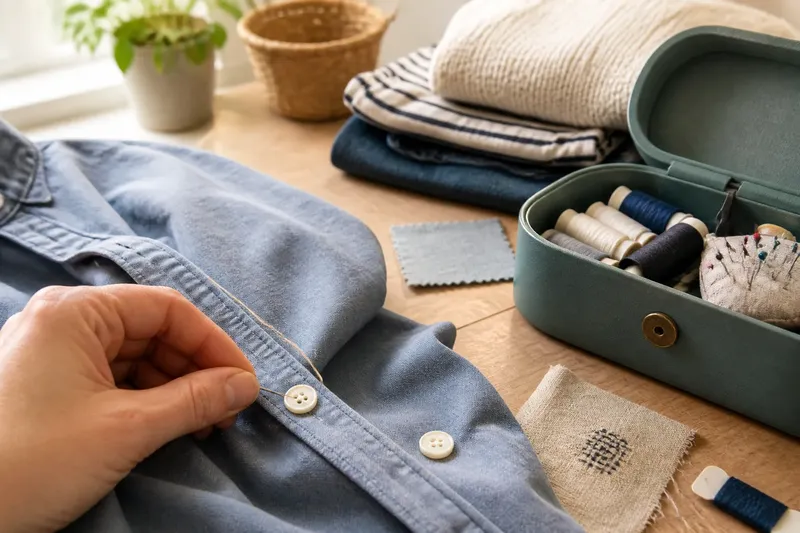
A loose button catches on a coat lining as you take it off. Keeping clothes in use often starts with deciding what that small defect calls for: a quick mend, a skilled repair, or a different use for the garment.
Keeping clothes in use starts with the garment, not a grand plan
Households have handled clothing care in many ways, shaped by available time, sewing skills, fabric and access to repair services. There is no single history in which everyone routinely mended everything. Some people sewed, altered or passed clothes on; others relied on relatives, paid help or replacement.
Ready-made clothing changed how garments could be acquired, but it did not make repair disappear. The choices available still depended on circumstance: a person with a needle and suitable thread might repair a seam, while someone without the time or skill could seek help or set the item aside.
That varied experience is more useful than a tidy story about the past. It leaves room for a practical question: what would make this particular garment useful again, and is that outcome worth pursuing?
Assess the damage before choosing a repair
Look at the fabric around the damaged area, not only the hole or loose fastening. A button can be easy to replace when the cloth beneath it is sound; a button pulled through weakened fabric may need a patch or professional attention.
Consider where the damage sits and how the garment is used. A split in a low-strain area may suit a simple hand-sewn seam, while damage at a pocket, cuff or knee may need a stronger repair. Delicate fabric, complicated linings and clothing used for protective purposes call for more care than a basic sewing kit can provide.
Choose among three useful outcomes: repair it yourself, arrange a repair with someone suitably skilled, or stop treating it as a garment in regular use. The last choice is not a failure of thrift; it is a decision about the item in front of you.
Choose a repair that suits the fabric and the job
A missing button, a short opened seam and a loose hem are often manageable with basic hand sewing when the surrounding fabric is intact. A needle, thread that suits the cloth, small fabric scissors and a secure place for spare buttons cover many ordinary repairs.
A patch or darn can keep a hole from spreading, though the result may remain visible. On work clothes, that may be entirely acceptable. On a delicate or carefully finished garment, a tailor or alteration service may be the better choice.
Use the care label and any maker guidance to avoid a repair that conflicts with the garment’s care needs. If the clothing has a safety function, or the repair needs specialised construction, seek a qualified professional.
Keep repair decisions concrete
A useful decision is based on what you can observe and what you are willing to do next. Use the checks below to choose an action rather than adding another item to an indefinite pile.
- Check whether the fabric around a loose button is intact; if it is, sew the button back on, but if it is thin or torn, reinforce it or ask a repairer.
- Check whether an opened seam is short and away from a high-strain area; if it is, stitch it closed, but if it is long or under tension, seek a stronger repair.
- Check whether a hole has stable fabric around it; if it does, consider a patch or darn, but if the cloth is fraying widely, ask a specialist whether repair is practical.
- Check whether the garment still fits and feels comfortable; if it does, assess the damage for repair, but if it does not, consider passing it on or finding another use.
- Check whether you have a suitable needle and thread; if you do, attempt a simple repair, but if you do not, obtain the right supplies or arrange help rather than forcing a poor match.
- Check whether the garment has a protective or safety purpose; if it does, use qualified repair advice, but if it is ordinary clothing, proceed only with a repair suited to your skill.
Say you have a cotton shirt with one missing button, a sound button placket and a spare button from the garment. You check that the cloth is not stretched, thread a needle with matching thread, sew the button on, then tug it gently to see whether it sits securely; if the cloth had split, the sensible next step would instead be reinforcement or a repair service. The result is a clear decision based on the actual condition, not on the mere presence of a sewing box.
What should happen when a repair is not a quick mend?
Give the garment a specific next destination. Put it in a bag to take to a tailor, arrange a hand-off with someone who has agreed to mend it, or place it with suitable textile reuse. A note saying “later” is not a destination, even when written in very neat handwriting.
Think about whether you would wear the garment after repair and whether the repair is within your time, skill and comfort. If the answer is no, choose another route instead of letting the item occupy space as a silent accusation.
Which questions help decide how to keep clothes in use?
Can I mend a garment without sewing experience?
Often, a simple button or short seam is a reasonable place to begin, provided the fabric is suitable and the garment has no safety function. Practise on spare cloth if you are unsure, and ask for help when the repair needs strength or precision you cannot provide.
Where should I keep sewing supplies?
Keep a small, secure set of tools with other clothing-care supplies, such as near the place where laundry is folded. Store needles and scissors safely away from children and pets, and avoid collecting tools you do not use.
When is a repair specialist the better choice?
Choose a specialist for delicate fabrics, complex construction, extensive damage or clothing that must perform a protective function. A professional can assess whether the garment can be repaired to suit its intended use.
When should I stop trying to repair a garment?
Stop when the item no longer suits your needs, the damage is impractical to address, or you do not want to spend the effort involved. Consider appropriate donation or textile-reuse routes if the garment is still suitable for them.
Keeping clothes in use does not require a household to become a sewing workshop. It asks for a clear judgement about each garment and a real next action: mend it, arrange help, reuse it differently or let it go.